
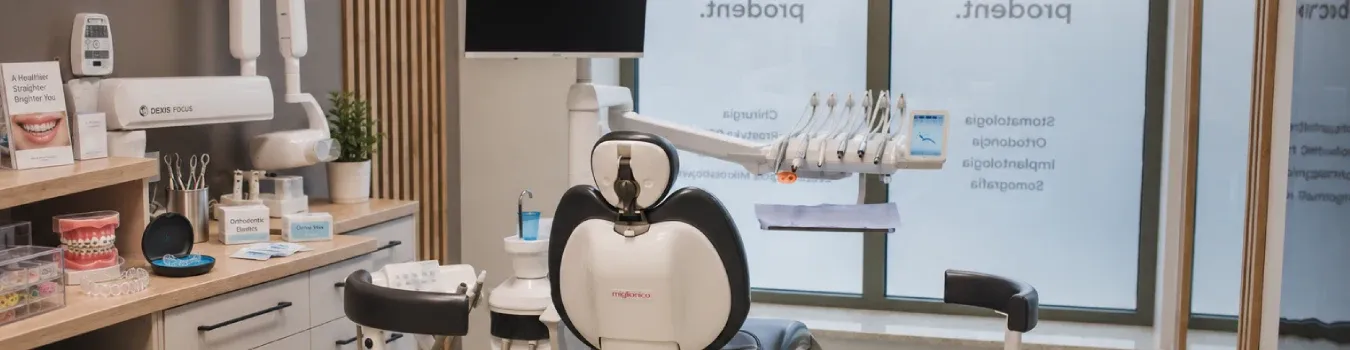
Plan treatment around your teeth and bite
Orthodontics changes tooth positions and can improve how the teeth meet. It may help with crowding, gaps, rotated teeth and selected bite problems in children and adults. An examination establishes whether orthodontic treatment is suitable and which approach makes sense for you.
At ProDent in Nysa, orthodontic care is provided by Karol Potrepko and Tomasz Dyl. The plan takes account of your teeth, gums, jaw development and ability to follow the daily care requirements.
Diagnosis before an appliance
We may use photographs, digital scans or impressions and appropriate X-rays. Panoramic and cephalometric imaging can be carried out at the clinic when needed. These records help the clinician explain the proposed tooth movements, alternatives, likely timetable and costs.
Decay and gum inflammation may need treatment before orthodontics begins. If a significant jaw discrepancy requires combined orthodontic and jaw surgery care, we discuss referral to an appropriate specialist centre.
Braces and appliances
| Option | What it may be used for |
|---|---|
| Metal fixed braces | Controlled tooth movement with brackets attached to teeth |
| Part-aesthetic or ceramic fixed braces | Selected treatment where a less visible bracket option is suitable |
| Early fixed appliances, such as 2×4 | Selected problems in children with a mixture of baby and permanent teeth |
| Removable appliances | Selected treatment in growing children, including Schwarz, Twin Block, Fränkel or Klammt designs |
| ONCE clear aligners | A sequence of removable transparent aligners for suitable cases |
| Expansion appliances | Selected use of designs such as Hyrax, Haas or hybrid expanders |
| Retainers | Maintaining tooth positions after active treatment |
Additional appliances, such as headgear or a face mask, may be considered where the diagnosis and growth stage support their use. The clinician explains why an appliance is recommended rather than choosing it on appearance alone.
Clear aligners
ONCE aligners are removed for eating and cleaning. They need consistent daily wear, usually around 22 hours, following your prescribed schedule. Aligners are commonly changed every 7–10 days, but your clinician decides the interval. They are not suitable for every type of tooth movement or jaw problem.
Children and adults
Children’s treatment may involve guiding development or addressing a specific problem before all permanent teeth erupt. Early treatment is not needed for every child. Adults can also have orthodontic care, provided the teeth and supporting tissues are suitable. Treatment choices and limitations can differ from those in a growing child.
The treatment journey
- Consultation: discuss concerns and examine the teeth and bite.
- Diagnostic records: collect the information needed to plan treatment.
- Plan review: agree the method, responsibilities, expected visits and estimate.
- Active treatment: fit the appliance or provide aligners, with regular checks and adjustments.
- Retention: maintain the result with the prescribed retainers and reviews.
During treatment, careful brushing and interdental cleaning are essential. Follow instructions about food, appliance wear and elastics. Contact the clinic about a broken appliance or lost aligner rather than making adjustments yourself.
What affects the cost?
The total may include diagnostic records, appliances for one or both arches, review visits, repairs and retainers. The price of a brace for one arch is not necessarily the cost of the whole course. See the orthodontic price list and ask for your individual plan.
Common questions
Is there an age limit for braces?
Suitability depends more on the condition of the teeth, gums and supporting bone than age alone. Growth influences the options in children, while adult treatment needs an individual assessment.
How long does orthodontic treatment take?
It depends on the diagnosis, type of movement and how the teeth respond. Attendance, appliance care and prescribed wear also affect progress. The clinician gives an estimate after reviewing your records.
Will my teeth feel sore?
Temporary pressure or soreness can occur after fitting or adjustments. Tell the clinic about severe, persistent or unexpected pain, or an appliance causing injury.
Are aligners better than fixed braces?
Neither is best for every case. The required movements, daily wear and your preferences help determine the suitable options.
Do I need retainers afterwards?
Yes, retention is an essential part of maintaining tooth positions. Teeth can move again, so follow the prescribed wear and review schedule.
Book an orthodontic consultation or call 570 400 405. Further reading: NHS information on braces and orthodontics.